Attorney Lead Generation: Exclusive vs Shared Leads and the Cost-Per-Signed-Case Math
How attorney lead generation actually works for law firms: exclusive vs shared leads, channel mix, and the cost-per-signed-case math that decides profit.

Rafael Hernandez
CEO and Co-Founder of Great Marketing AI


I hope you find this useful. If you want our team to run your law firm's performance marketing, book a strategy call.
Author: Rafael Hernandez | CEO and Co-Founder of Great Marketing AI
Key Takeaways
- Attorney lead generation is the process of acquiring prospective-client inquiries for a law firm, then converting them into signed cases. The only metric that decides whether it is profitable is cost per signed case, not cost per lead.
- Exclusive leads go to one firm and convert at roughly 3 to 5 times the rate of shared leads, which are sold to several firms at once and trigger a race-to-call. Cheap shared leads frequently produce the most expensive signed cases.
- The two paths are buying leads from a vendor or building owned channels. Buying delivers volume fast but rents the pipeline. Building takes months but compounds and lowers cost per signed case over time.
- For Spanish-speaking motor vehicle accident claimants, bilingual intake is the single biggest lever on conversion. A lead that cannot be answered in the claimant's language is a lead the firm paid for and lost.
- Run the unit-economics math before scaling any source: average case value, lead-to-signed conversion rate, and cost per lead together reveal whether a channel makes money or quietly drains the budget.
Attorney lead generation is the process of acquiring prospective-client inquiries for a law firm and converting them into signed cases. It is not a volume game. The metric that decides whether it makes money is cost per signed case, which folds in lead price, conversion rate, and case value. A firm can buy leads from a vendor or build owned channels, and within the buying path the biggest fork is exclusive leads, which go to one firm, versus shared leads, which are sold to several firms at once. Exclusive personal injury leads convert at roughly three to five times the rate of shared leads, according to Jorge Argota, which is why the cheapest leads often produce the most expensive cases. This is the buyer-side guide to attorney lead generation: how the economics work, what to buy, what to build, and how bilingual intake changes the math for motor vehicle accident firms.
Key Takeaways
- Cost per signed case is the only number that matters. Attorney lead generation is judged on signed cases, not raw inquiry counts. A channel with cheap leads and a low close rate loses to a channel with expensive leads and a high close rate.
- Exclusive leads beat shared leads on ROI for most firms. Exclusive leads convert at three to five times the rate of shared leads because there is no race-to-call against three to eight other firms.
- Buying rents the pipeline; building owns it. Purchased leads deliver volume fast but never get cheaper. Owned channels compound and lower acquisition cost over time.
- Bilingual intake is a conversion multiplier for MVA cases. A Spanish-speaking lead the firm cannot answer in Spanish is a lead it paid for and lost.
- Unit economics decide everything. Average case value, lead-to-signed rate, and cost per lead together tell a firm whether a source prints money or drains the budget.
What Attorney Lead Generation Actually Means
Attorney lead generation describes every activity that turns a stranger with a legal problem into a tracked inquiry inside a law firm's intake system. That inquiry might arrive as a phone call, a form submission, a case-evaluation request, or a transferred call from a vendor. The work does not end at the inquiry. A lead only has value once intake converts it into a signed retainer.
This is why experienced firms treat lead generation attorney work as a revenue function, not a marketing expense. The same 50 inquiries can be worth nothing or six figures depending on case mix, close rate, and average case value. Two firms buying identical leads can post wildly different returns based on intake speed and skill alone.
Understanding the full funnel, from inquiry to signed case, is the foundation for every decision that follows. For a channel-by-channel ranking of where those inquiries come from, our pillar guide to lead generation for lawyers breaks down eight sources by cost per signed case.
Exclusive vs Shared Attorney Leads
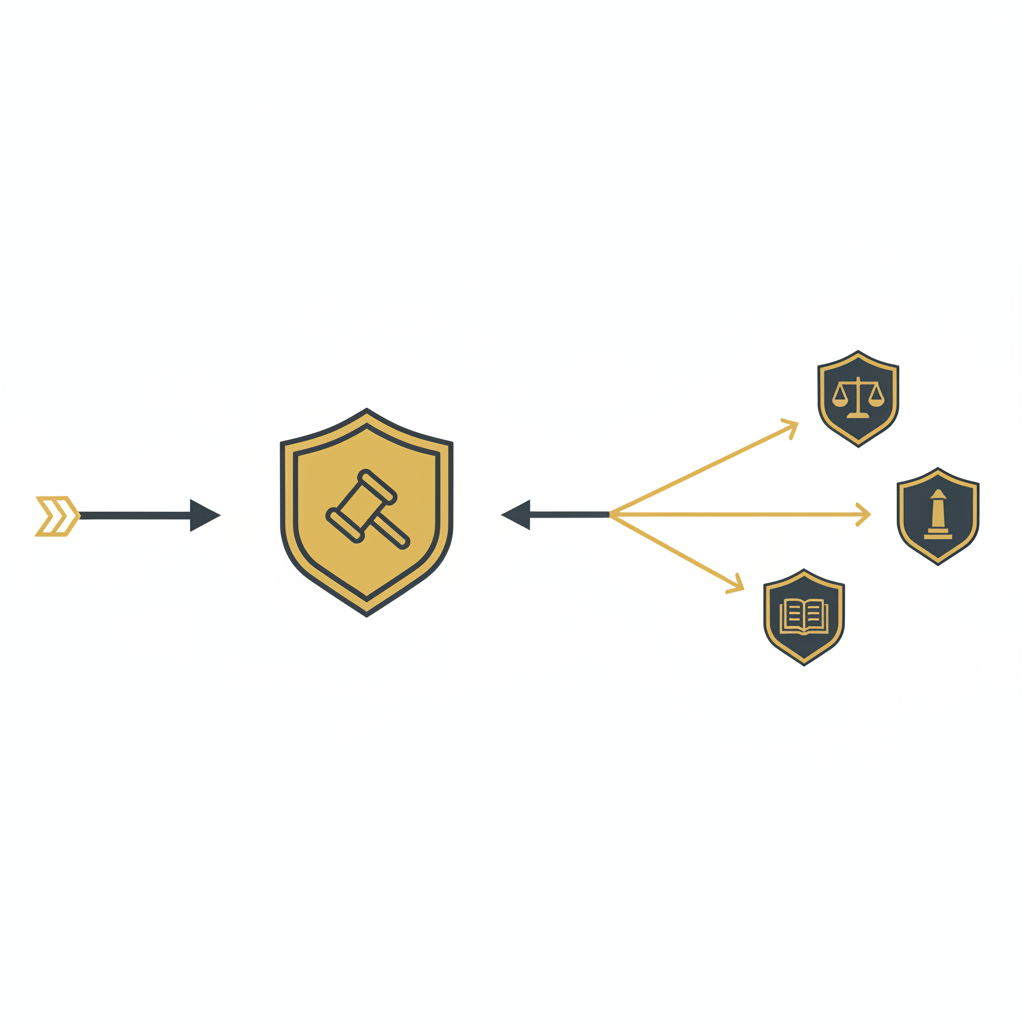
The single most important decision in purchased attorney lead generation is exclusive versus shared. An exclusive lead is delivered to one firm only. A shared lead is sold to several firms at once, usually three to eight, who all receive the same contact at roughly the same moment.
Shared leads create a race-to-call dynamic. As Injury Lead Gen explains, whichever firm reaches the prospect first has the best chance of signing the case, and the rest have paid for a contact they will likely never convert. That dynamic is why exclusive attorney leads convert at three to five times the rate of shared leads.
| Factor | Exclusive Leads | Shared Leads |
|---|---|---|
| Sold to | One firm only | 3 to 8 firms |
| Typical price per lead | $100 to $300+ | $20 to $80 |
| Relative close rate | 3 to 5x higher | Baseline |
| Cost per signed case (PI) | ~$800 to $2,500 | ~$3,000 to $6,000 |
| Competition at intake | None | Race-to-call |
The table makes the trap obvious. Shared leads look cheaper per lead and end up far more expensive per signed case.
The Cost-Per-Signed-Case Formula

Cost per signed case is the formula that ends most attorney lead generation debates. It equals cost per lead divided by the lead-to-signed-case conversion rate. The arithmetic exposes why per-lead pricing is misleading.
Consider two sources. Source A sells leads at $50 that close at 5 percent, producing a $1,000 cost per signed case. Source B sells leads at $200 that close at 30 percent, producing a $667 cost per signed case. Source B is one-third cheaper per signed case despite charging four times as much per lead.
Now layer in case value. If the average signed motor vehicle accident case is worth several thousand dollars in fees, a $667 acquisition cost is highly profitable, while the $1,000 source may still work but with a thinner margin. The only way to know is to track every lead by source through to signed retainer. Most firms skip this attribution work and make budget decisions on cost per lead, which is exactly the wrong number. Calculating your own cost per signed case by source is the first task in any serious attorney lead generation program.
Buy Leads or Build Owned Channels
Every firm running lead generation for attorney practices faces a build-versus-buy choice. Buying leads from a personal injury lead generation company delivers volume within days and is ideal for filling spare intake capacity or testing a new practice area. The drawback is that the firm rents the pipeline. The cost never declines, and the moment payment stops, the leads stop.
Building owned channels works the opposite way. SEO, content, and a strong Google Business Profile take six to twelve months to mature, but once content ranks, the marginal cost of each additional inquiry approaches zero. According to Grand View Research, digital advertising continues to consolidate around measurable, intent-driven channels, which rewards firms that own their search presence rather than renting it.
Most successful firms do both: buy for immediate case flow while building owned channels as the compounding foundation. A focused law firm marketing strategy sequences the two so the firm is never fully dependent on rented leads. As Rafael Hernandez, Founder and CEO of Great Marketing AI, puts it, "Buying leads buys you time. Building channels buys you margin. The firms that win do both on purpose, not by accident."
Bilingual Lead Generation for MVA Cases

For firms pursuing Spanish-speaking motor vehicle accident claimants, bilingual intake is the largest single lever on conversion. A campaign can generate qualified Spanish-speaking inquiries all day, but if the intake team cannot respond in the claimant's language, the firm has paid for a lead it cannot sign.
Same-language intake builds trust faster and closes the time-to-contact gap that decides shared-lead races. The Hispanic population is among the fastest-growing segments in the United States per the U.S. Census Bureau, and motor vehicle accidents are a high-frequency, high-value case type within it. Firms that pair bilingual campaigns with bilingual intake capture cases their English-only competitors paid to generate and then lost.
This is the exact niche we specialize in. Our motor vehicle accident leads program is built around exclusive, bilingual MVA inquiries with intake support that answers in the claimant's language. The bilingual angle is not a feature bolted onto a generic funnel, it is the conversion engine for this segment.
Building a Profitable Attorney Lead Generation System

A profitable system rests on three disciplines. First, attribution: tag every lead with its source and follow it to signed retainer so cost per signed case is measurable by channel. Second, intake speed: leads contacted within five minutes convert far better than leads contacted hours later, a gap that quietly destroys ROI across every paid source.
Third, diversification. A durable lead generation attorney program runs three to five sources in parallel so a single platform change or cost spike cannot cripple case flow. The mix shifts with firm stage. Newer firms lean on purchased and paid sources for immediate cases, while established firms shift weight toward owned channels and referrals that carry a lower cost per signed case.
Working with a marketing agency for law firms that reports on signed cases rather than impressions keeps the focus on revenue. The goal of attorney lead generation is never more leads. It is more profitable signed cases, measured honestly, source by source.
Conclusion
Attorney lead generation is an economics problem disguised as a marketing problem. The firms that profit are the ones that translate every per-lead price into a cost per signed case, choose exclusive over shared when the conversion gap justifies it, and pair purchased volume with owned channels that compound. For motor vehicle accident practices chasing Spanish-speaking claimants, bilingual intake is the difference between paying for leads and signing cases. Build the attribution to see the truth, fix intake so the truth is good, and let the cost-per-signed-case number, not the cost-per-lead number, decide where the budget goes.
Turn Ad Spend Into Signed Cases
We blend AI-driven testing with proven performance strategy to attract qualified traffic and turn it into revenue—fast, trackable, and scalable.
- PI Lead Generation — exclusive, AI-qualified leads across MVA, slip & fall, med mal, and more.
- Facebook & Instagram Ads — reach customers where they scroll.
- Google Ads — capture people actively searching for you.
- Website Design — turn visitors into buyers with high-converting sites.
- AI Automations — save hours and never miss a follow-up.
- Email Marketing — nurture leads and close sales on autopilot.
- SEO — get found by customers searching for what you sell.
FAQs

About the author
Rafael Hernandez
CEO and Co-Founder of Great Marketing AI
Rafael Hernandez is the Founder of Great Marketing AI and a former Microsoft Engineer. He specializes in performance marketing for personal injury law firms, managing over $10M in ad spend to help attorneys generate signed cases across every PI case type. His strategies focus on exclusive lead generation, AI-powered qualification, and eliminating wasted budget.
About Great Marketing AI
Great Marketing AI: Performance marketing for personal injury law firms
We help personal injury law firms scale with exclusive, AI-qualified leads across every PI case type: MVA, slip & fall, medical malpractice, and wrongful death. Native English and Spanish campaigns, enterprise-grade Meta + Google ad management, and AI lead qualification before every intake.
100% Exclusive Leads
Never shared between firms. Territory-protected.
Native Spanish & English Campaigns
Built by native speakers, not Google Translate.
AI Lead Qualification
Pre-qualified before they ever reach your intake team.