Marketing to Hispanic Personal Injury Clients: Language, Culture, and Trust Signals That Convert
Go beyond translating ads. Learn the cultural trust signals, channel preferences, and compliance rules that convert Hispanic personal injury prospects into clients.

Rafael Hernandez
CEO and Co-Founder of Great Marketing AI


I hope you find this useful. If you want our team to run your law firm's performance marketing, book a strategy call.
Author: Rafael Hernandez | CEO and Co-Founder of Great Marketing AI
Key Takeaways
- Confianza (trust) is the #1 purchase driver for Hispanic personal injury prospects: not price, not speed. Your ads and intake process must signal trustworthiness before they signal urgency.
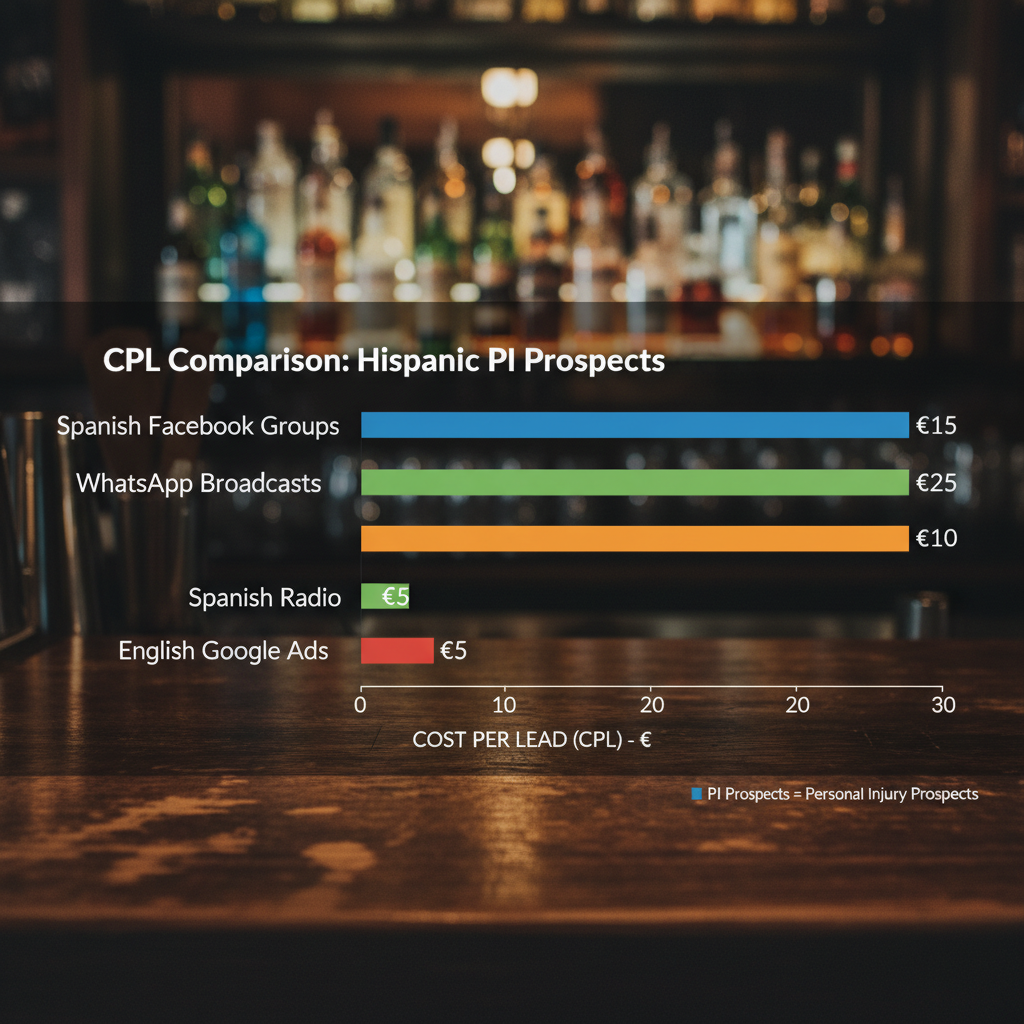
- Spanish-language Facebook groups, WhatsApp broadcasts, and Spanish radio outperform English-only digital channels by a wide margin for MVA lead generation in Hispanic communities.
- Translating your ads is not the same as transcreating them. Colloquialisms, formality level, and imagery must match the specific sub-community (Mexican, Dominican, Puerto Rican, etc.).
- Undocumented immigrants can file personal injury claims in every U.S. state. Your ads must communicate this clearly, because fear of legal exposure suppresses inquiry rates dramatically.
- TCPA compliance for Spanish-language SMS is stricter than it appears. Consent must be documented in the same language as the opt-in message.
- A bilingual intake team that answers within 60 seconds converts at 3-5x the rate of an English-only team with a callback model.
Marketing to hispanic personal injury clients is not a translation problem. It is a trust problem.
Law firms that understand this distinction generate exclusive mva leads at a fraction of the cost their competitors pay. Firms that only run their English ads through Google Translate lose to the same three competitors in every market, every quarter.
The Hispanic and Latino population in the United States reached 63.7 million people in 2023, according to the U.S. Census Bureau, representing 19% of the total U.S. population. In personal injury law, this demographic is systematically underserved, which is why effective marketing to hispanic personal injury clients represents one of the highest-value gaps in legal marketing today. According to a 2024 report from the Hispanic Bar Association of California, fewer than 12% of personal injury law firms in major markets maintain a fully bilingual intake and marketing operation. That gap is the opportunity.
At Great Marketing AI, we run spanish speaking personal injury lawyer marketing campaigns across seven states. The data from those campaigns forms the backbone of this guide. Nothing here is theoretical. Every framework we share comes from live ad accounts, real intake recordings, and actual CPL data from Spanish-language PI campaigns.

Key Takeaways
- Confianza (trust) is the number one purchase driver for Hispanic personal injury prospects, not price and not speed. Your ads and intake process must signal trustworthiness before they signal urgency.
- Spanish-language Facebook groups, WhatsApp broadcasts, and Spanish radio outperform English-only digital channels by a wide margin for MVA lead generation in Hispanic communities.
- Translating your ads is not the same as transcreating them. Colloquialisms, formality level, and imagery must match the specific sub-community (Mexican, Dominican, Puerto Rican, etc.).
- Undocumented immigrants can file personal injury claims in every U.S. state. Your ads must communicate this clearly because fear of legal exposure suppresses inquiry rates dramatically.
- TCPA compliance for Spanish-language SMS is stricter than it appears. Consent must be documented in the same language as the opt-in message.
- A bilingual intake team that answers within 60 seconds converts at 3-5x the rate of an English-only team with a callback model.
What Confianza Means for Your Firm's Marketing
Confianza is not a tagline. It is a social contract. In Latin American cultures, business decisions, especially high-stakes ones like hiring a lawyer after a motor vehicle accident, run through a network of trusted relationships before they reach a professional.
A prospective client might see your Spanish-language Facebook ad on Monday. She will mention it to her sister on Tuesday. Her sister will ask her brother-in-law who works construction whether he has heard of your firm. If none of them have, the lead dies before it reaches your intake team, regardless of how well your ad performs on paper.
Confianza is built through three channels:
Community visibility. Sponsoring local Spanish-language events, advertising on community FM stations (not just Pandora), and appearing in interviews on Spanish-language local TV news (Univision, Telemundo affiliates) builds the name recognition that turns a stranger's ad click into a sister's endorsement.
Real social proof. Stock photography in Spanish-language ads is immediately identifiable and immediately off-putting. Testimonials en español with real client names, photos (with permission), and specific case outcomes are the highest-converting creative element we have tested across our client portfolio. "Nos ayudaron cuando nadie más podía" (They helped us when no one else could) from a real Maria Gutierrez in Phoenix outperforms every headline we have tested.
Familismo framing. Familismo is the cultural value that places the family unit above the individual. Personal injury marketing that appeals to the claimant alone misses the decision dynamic. The better frame is: "Protect what your family has worked for." The family, not the individual, hires your firm. Your ads should reflect this.
Channel Strategy: Where to Find Hispanic PI Prospects
Hispanic marketing for law firms starts with being in the right place, not just speaking the right language.
Spanish-Language Facebook Groups
The highest-volume, lowest-CPL channel we operate is Spanish-language Facebook community groups. These are not Spanish-language ads served to Spanish speakers on Facebook. They are organic community groups with 5,000 to 150,000 members where community news, job postings, housing listings, and legal questions appear alongside each other.
Firms that are visible in these groups, whether through moderator sponsorships, community resource posts, or simply having bilingual staff who answer legal questions publicly, generate an inbound pipeline that costs a fraction of paid search.
Paid ads in Spanish on Facebook (Meta) are the second layer. The key insight from our campaign data: the ad creative that converts for a Mexican-American audience in Los Angeles does not convert for a Dominican-American audience in New York. Sub-community specific imagery, idioms, and music references matter.
WhatsApp Broadcasts
WhatsApp is the dominant messaging application in virtually every Latin American immigrant community in the United States. According to Meta's Q4 2023 earnings data, WhatsApp processes over 100 billion messages per day globally, with disproportionate usage in Latin American communities.
For law firms, WhatsApp broadcast lists (where opted-in contacts receive mass messages) are a highly compliant, high-open-rate follow-up channel. Broadcast messages in Spanish from a recognized number get open rates above 90% in our campaigns, compared to 15-25% for email follow-up.
The critical rule: TCPA consent must be documented before any automated or mass message is sent. We address compliance in full in the checklist below.
Spanish Radio
Spanish radio remains high-intent for MVA marketing because the audience skews 35 to 65 years old, employed in physical-labor industries (construction, agriculture, manufacturing), and therefore statistically overrepresented in motor vehicle accident cases. iHeartMedia Latino, Univision Radio, and local Spanish-language FM stations in metro markets all offer direct advertising. CPLs from Spanish radio are higher than digital, but the leads are warmer and intake conversion rates are significantly better.
Transcreation: What It Is and Why Translation Fails
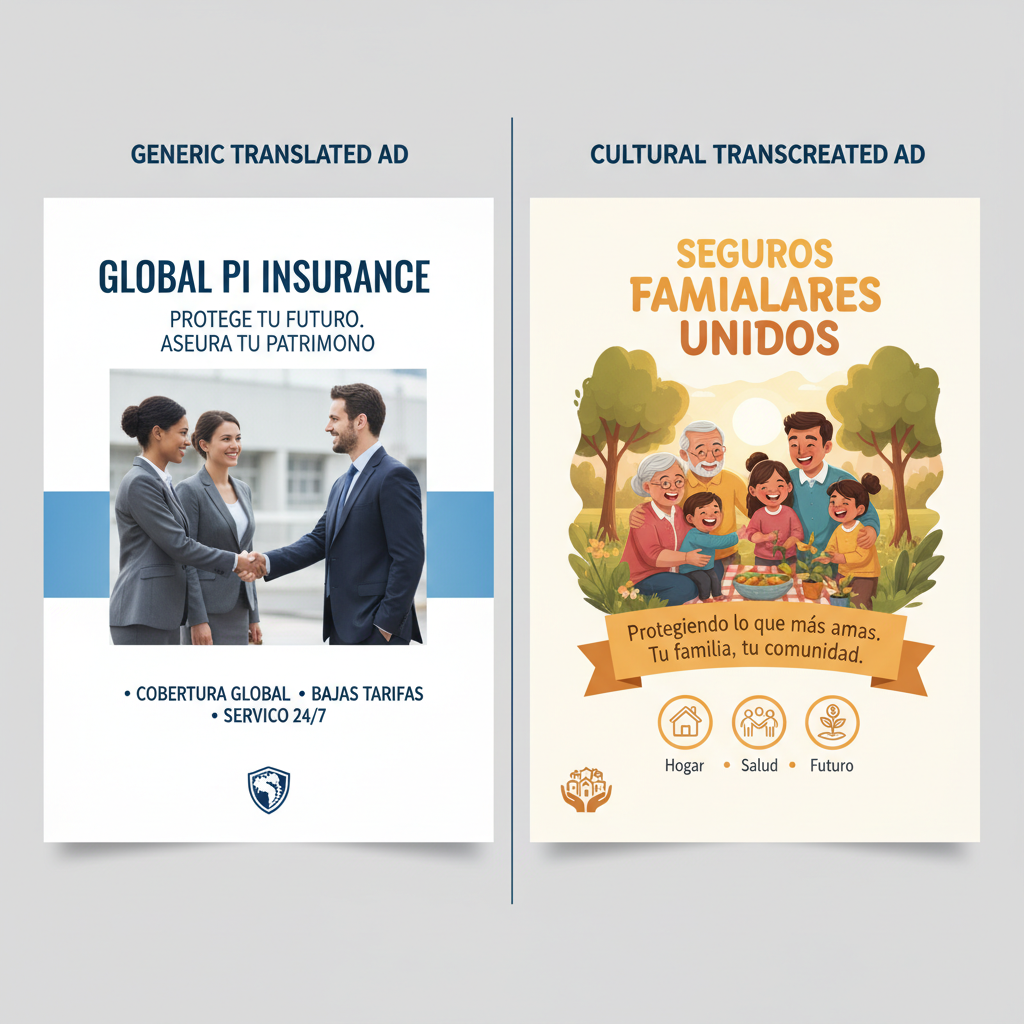
Translation converts words. Transcreation converts meaning.
"Call now for a free case evaluation" translates to "Llame ahora para una evaluación gratuita de su caso." That is accurate Spanish. It is also formal, cold, and culturally tone-deaf for a Mexican-American audience in South Texas that uses informal address in conversation.
The same message, transcreated for that audience: "Cuéntenos lo que pasó, la consulta no cuesta nada." (Tell us what happened, the consultation costs nothing.) Warm, conversational, solution-framed.
Three transcreation variables matter most for personal injury marketing ideas in Spanish:
Formality register. Spanish has formal (usted) and informal (tú) address. Formal works for Dominican and Colombian audiences; informal works for Mexican and Central American communities. Getting this wrong signals that you are an outsider trying to sell to a community you do not understand.
Regional vocabulary. "Accidente de tráfico" is Castilian Spanish. "Accidente de carro" or "choque" is how most U.S. Hispanic communities describe a car accident. Use the vocabulary your audience actually uses.
Imagery and casting. Ads featuring people who look like the target community, speaking in the right accent, in environments that reflect everyday life (not stock-photo courtrooms) outperform generic "diverse" stock creative by a substantial margin in our A/B testing.
Advertising to Undocumented Immigrants: Legal and Ethical Framework
This is the topic most law firms avoid and most marketing agencies refuse to address directly. The result is that a significant segment of the Hispanic PI market, undocumented immigrants who are injured by negligent drivers, does not know their rights and does not call.
The law is clear: undocumented immigrants have the same right to file personal injury claims as any U.S. citizen. This right is established at the state level and has been upheld in court decisions across California, Texas, Florida, New York, and every other major PI state. The defendant's insurance company pays regardless of the claimant's immigration status.
The barrier is fear. Undocumented prospective clients fear that calling a law firm will expose them to immigration enforcement. This fear is not irrational given the regulatory environment of the past decade. It is the single largest suppressor of inquiry volume in this market segment.
The fix is explicit reassurance in your ad copy. "No importa tu estatus migratorio. Tienes derechos." (Your immigration status does not matter. You have rights.) This is factually accurate, legally appropriate, and dramatically increases inquiry rates from this segment.
What you must never do: collect, store, or transmit immigration status information. Your intake form should not ask for it. Your CRM should not have a field for it. The attorney-client relationship covers communications after engagement, but lead intake is not protected and should not solicit this information.
The Spanish Ad Creative Compliance Checklist
This checklist covers the key compliance requirements for marketing to hispanic personal injury clients via SMS, social, and radio. It does not constitute legal advice and is not a substitute for review by your state bar association and a TCPA compliance attorney.
State Bar Advertising Rules for Spanish-Language Ads
- The attorney or law firm name appears in the ad as required by state bar rules
- Disclaimer language ("Results may vary" or equivalent) is present in Spanish, not just English
- No use of the word "especialista" (specialist) unless the attorney is board-certified in that specialty
- "Abogados" or "Attorneys" appears in the ad if the firm name alone does not make the professional context clear
- If the ad features a specific case result, the result is real and the required disclaimer ("This result is not typical") appears in Spanish
TCPA Compliance for Spanish-Language SMS
- Prior express written consent obtained before any automated or bulk SMS
- Consent form and opt-in disclosure written in Spanish if the prospect came through a Spanish-language landing page
- Consent records stored with date, time, source URL, and phone number for minimum four years
- Opt-out mechanism (STOP / PARAR) clearly disclosed in every message
- Campaign run through a TCPA-compliant platform with audit trail capability
Undocumented Client Advertising Considerations
- Ad copy includes explicit statement that immigration status does not affect legal rights
- Intake form does not ask for immigration status
- CRM does not store immigration status data
- Intake staff trained not to ask about or record immigration status
- Attorney-client engagement letter reviewed for language that might discourage undocumented clients
Bilingual Intake Standards
- Spanish-language phone line answered by a native or fluent bilingual speaker (not a translation service)
- Response time under 60 seconds for Spanish-language inquiries
- Initial greeting in Spanish even if inquiry came through a bilingual web form
- No transfer to an English-speaking agent without the prospect's consent
Bilingual Intake: The Conversion Point No Marketer Controls (But Every Marketer Affects)
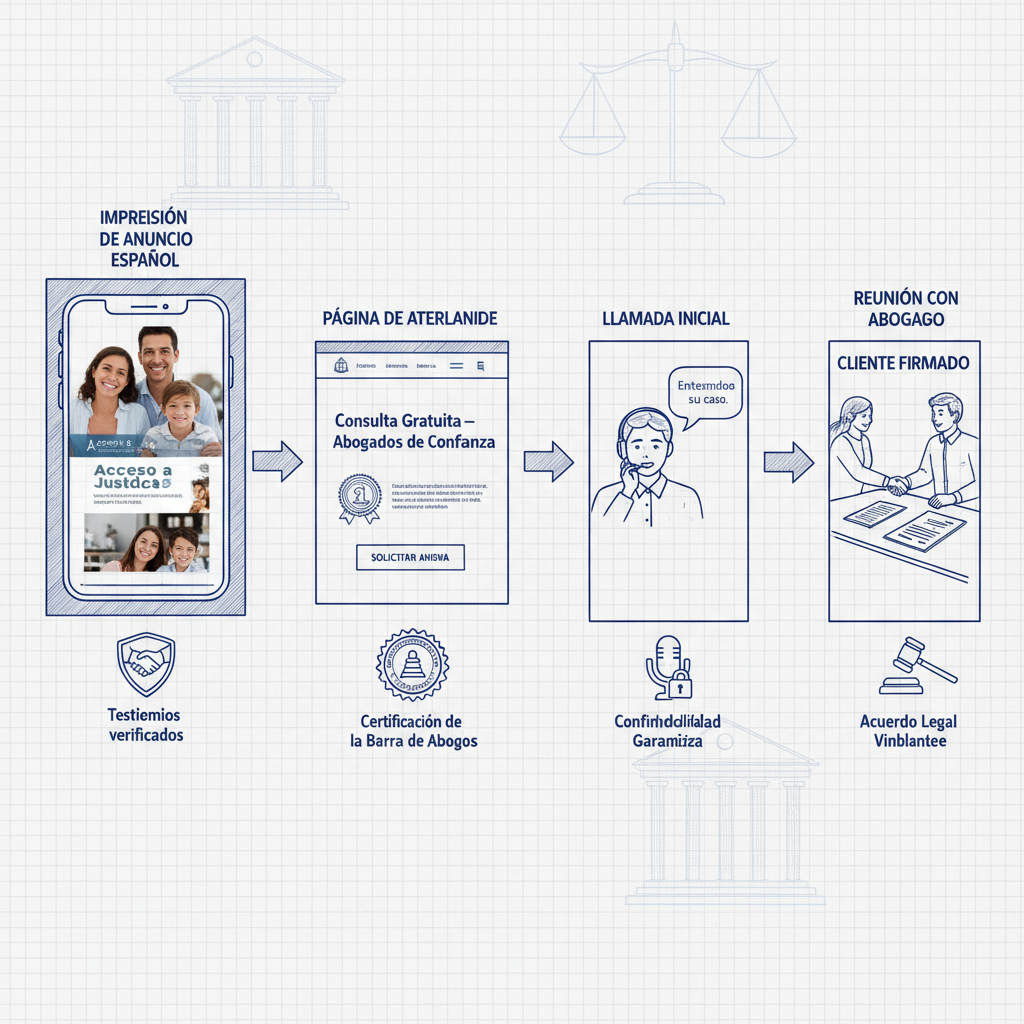
Here is the most common failure pattern we see at Great Marketing AI: a law firm runs excellent Spanish-language ad campaigns, generates qualified mva leads, and then loses 60-70% of them at intake because the person answering the phone does not speak Spanish.
This is not just a missed opportunity. It is an active trust violation. A Spanish-speaking prospect who calls after seeing a Spanish ad and reaches an English-only receptionist receives the message: "This firm advertised to me in my language but does not actually serve people like me."
According to research from Harvard Business Review, leads contacted within one minute of submitting a form convert at 391% higher rates than leads contacted after five minutes. For Hispanic PI prospects, this number amplifies because slower response creates space for the prospect to ask a family member for a referral instead.
The bilingual intake investment we recommend to every client: one dedicated Spanish-first intake agent per 50 Spanish-language leads per month, equipped with a structured intake script that opens with rapport before qualification. The ROI on that hire is the fastest we see in any marketing investment.
For law firms that run Spanish-language campaigns through a hispanic marketing agency built specifically for this market, the intake process is optimized as part of the campaign design, not treated as a separate problem.
Internal Linking and Content Context
This spoke article sits within the Hispanic and Spanish MVA Marketing cluster. The pillar for this cluster covers how how Hispanic marketing agencies drive exclusive MVA leads from a strategic and agency-selection lens. This article addresses the executional layer: the specific trust signals, channel tactics, and compliance requirements that determine whether a campaign converts once it reaches prospective clients.
For law firms building their first Spanish-language campaign and evaluating what Spanish motor vehicle accident leads look like at the top of the funnel, the pillar article is the recommended starting point. This guide is for firms that are already running Spanish campaigns and want to understand why some convert better than others.
Conclusion
The Hispanic personal injury market is the most underserved, highest-potential segment in U.S. legal marketing. Sixty-four million people, systematically ignored by English-only firms and poorly served by firms that treat Spanish as a language toggle rather than a cultural framework.
Marketing to hispanic personal injury clients works when it earns confianza. That means showing up in community channels where trust already exists (Spanish Facebook groups, WhatsApp networks, Spanish radio), using transcreated creative that speaks to the specific sub-community, addressing the immigration barrier directly, and backing every ad impression with bilingual intake that converts the interest you generate.
The firms that dominate this market in the next five years will not be the ones with the biggest media budgets. They will be the ones that understand this community well enough to be trusted by it.
Turn Ad Spend Into Signed Cases
We blend AI-driven testing with proven performance strategy to attract qualified traffic and turn it into revenue—fast, trackable, and scalable.
- PI Lead Generation — exclusive, AI-qualified leads across MVA, slip & fall, med mal, and more.
- Facebook & Instagram Ads — reach customers where they scroll.
- Google Ads — capture people actively searching for you.
- Website Design — turn visitors into buyers with high-converting sites.
- AI Automations — save hours and never miss a follow-up.
- Email Marketing — nurture leads and close sales on autopilot.
- SEO — get found by customers searching for what you sell.
FAQs

About the author
Rafael Hernandez
CEO and Co-Founder of Great Marketing AI
Rafael Hernandez is the Founder of Great Marketing AI and a former Microsoft Engineer. He specializes in performance marketing for personal injury law firms, managing over $10M in ad spend to help attorneys generate signed cases across every PI case type. His strategies focus on exclusive lead generation, AI-powered qualification, and eliminating wasted budget.
About Great Marketing AI
Great Marketing AI: Performance marketing for personal injury law firms
We help personal injury law firms scale with exclusive, AI-qualified leads across every PI case type: MVA, slip & fall, medical malpractice, and wrongful death. Native English and Spanish campaigns, enterprise-grade Meta + Google ad management, and AI lead qualification before every intake.
100% Exclusive Leads
Never shared between firms. Territory-protected.
Native Spanish & English Campaigns
Built by native speakers, not Google Translate.
AI Lead Qualification
Pre-qualified before they ever reach your intake team.